
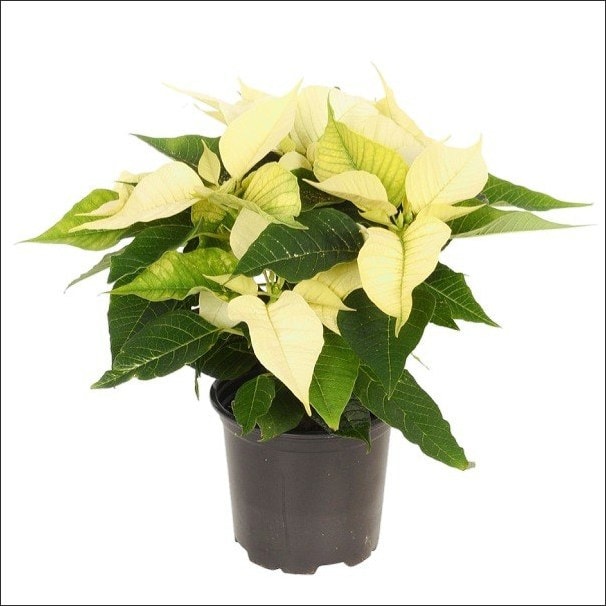
Description
🌺 About the Poinsettia Plant
Botanical name: Euphorbia pulcherrima
Common name: Poinsettia
Origin: Native to Mexico and Central America
Famous for: Brightly colored bracts surrounding small, yellow flowers
Toxicity: Mildly toxic to pets and humans if ingested, causing stomach upset or skin irritation
🌿 Poinsettia Plant Care Guide
🪴 Light
Indoors: Bright, indirect sunlight is ideal.
Outdoors (if applicable): Filtered sunlight; avoid direct harsh afternoon sun.
💧 Watering
Keep soil moist, but not soggy.
Water when the top inch of soil feels dry.
Drainage is key – never let the plant sit in water (empty saucer after watering).
🌡️ Temperature
Ideal range: 60–70°F (15–21°C)
Avoid cold drafts and sudden temperature changes.
Keep away from heaters, fireplaces, and cold windows.
💨 Humidity
Moderate humidity is best.
Dry indoor air (common in winter) can stress the plant. Consider a humidifier or pebble tray.
🌱 Soil
Use a well-draining, peat-based potting mix.
Avoid compacted or heavy soils that retain too much water.
✂️ After the Holidays: Poinsettia Year-Round Care
If you’d like to keep your poinsettia beyond the holiday season:
🌼 Post-Holiday (January–March)
Continue to water and keep in bright light.
Bracts will fade and fall off—this is normal.
✂️ Pruning (April)
Cut the plant back to about 4–6 inches tall.
Repot if necessary.
Place in a sunny window.
🌞 Summer (May–September)
Move the plant outdoors once night temps are above 55°F (13°C).
Fertilize monthly with a balanced houseplant fertilizer.
🍁 Re-blooming Process (October–December)
To get poinsettias to rebloom with colored bracts, they require strict darkness at night:
👉 Starting in early October:
Give them 14–16 hours of total darkness each night for about 8–10 weeks.
Cover with a box or place in a dark closet from 5 p.m. to 8 a.m.
During the day, provide bright, indirect light.
Once colored bracts start to appear (mid to late November), normal light is fine.
⚠️ Common Problems
| Problem | Cause | Fix |
|---|---|---|
| Yellowing leaves | Overwatering or poor drainage | Let soil dry slightly between watering |
| Dropping leaves | Drafts or low light | Move to stable, bright location |
| Wilting | Underwatering or root rot | Check soil moisture and drainage |
| No color change | Insufficient darkness in fall | Restart strict light/dark schedule |
🧪 Are Poinsettias Poisonous?
They are not deadly, but can cause mild irritation or vomiting if eaten by pets or children.
Sap may irritate skin or eyes.
Wash hands after handling.



Reviews
There are no reviews yet.